Political News

Political News

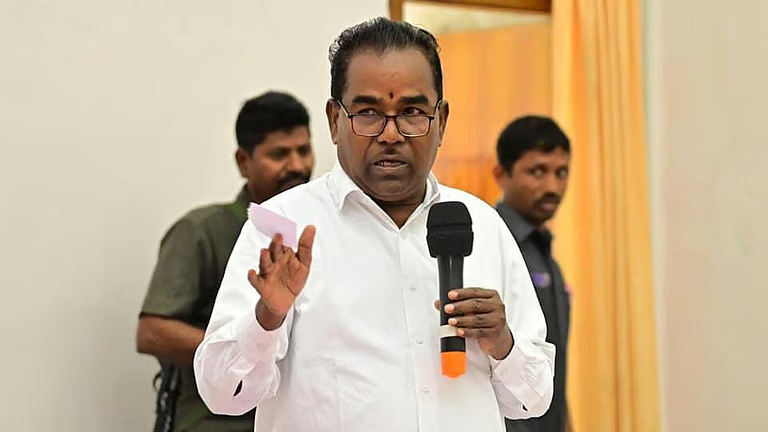
BRS Nagarkurnool MP P. Ramulu joins BJP

The defection of sitting Nagarkurnool Member of Parliament Pothuganti Ramulu from the Bharat Rashtra Samithi (BRS) to the Bharatiya Janata Party (BJP) marked a significant political shift in Telangana’s southern landscape. The high-profile transition, executed alongside several key supporters and family members, dealt a substantial blow to the BRS leadership as it struggled to maintain its core organizational strength ahead of major electoral challenges. Accompanied by a wave of regional leaders, Ramulu officially joined the saffron party at the BJP national headquarters in New Delhi. The induction took place in the presence of senior leadership, including BJP Parliamentary Board member K. Laxman, Telangana in-charge Tarun Chugh, national vice-president D.K. Aruna, and then-Union Minister Rajeev Chandrasekhar. BJP leaders heavily welcomed the move, highlighting Ramulu’s clean political reputation and long-standing influence as a dedicated Dalit leader, asserting that his entry would strongly solidify the party’s support among marginalized and weaker sections across the state. Addressing the media following his induction, Ramulu attributed his political shift to a deep alignment with Prime Minister Narendra Modi’s national vision, particularly emphasizing the center’s commitment to the categorization of Scheduled Castes (SCs), a critical socio-political issue in the region. The move also carried distinct local implications, as the BJP subsequently positioned Ramulu’s son, Pothuganti Bharath Prasad, to carry forward the family’s political mantle in the regional constituency. The shift effectively transformed Nagarkurnool into a high-stakes, multi-cornered electoral battleground, altering the traditional power dynamic between the BRS, the BJP, and the ruling Congress.
Political News

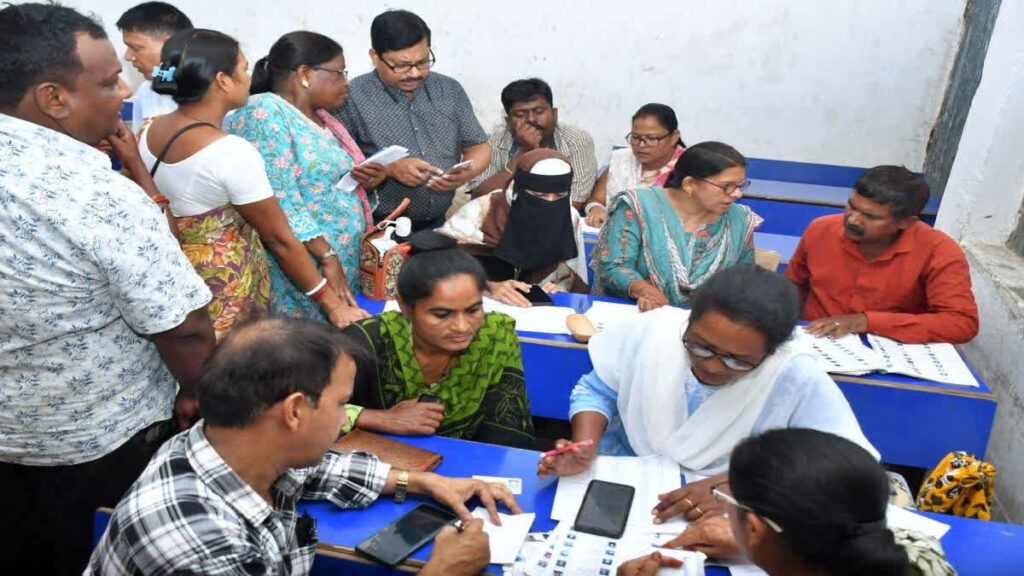
Special Intensive Revision: Discrepancies Identified In Details Of 89 Lakh Voters

A major political storm has erupted in West Bengal centered around the Election Commission of India’s (ECI) Special Intensive Revision (SIR) of electoral rolls, which resulted in the removal of 89 lakh voters—representing roughly 11.6 percent of the state’s entire electorate. The massive deletion became the primary battleground issue during the 2026 assembly elections, heavily shaping the political narrative between the ruling Trinamool Congress (TMC) and the Bharatiya Janata Party (BJP). Chief Minister Mamata Banerjee and the TMC launched a fierce campaign against the exercise, branding it a targeted, exclusionary tactic designed to systematically disenfranchise a significant portion of the population just weeks before polling. Opposition voices and political analysts pointed out that the 89 lakh deleted names actually exceeded the TMC’s total winning margin from the 2021 assembly elections, sparking intense debates over the democratic legitimacy and potential electoral fallout of such a massive list cleanup. In contrast, the BJP and the Election Commission strongly defended the Special Intensive Revision as a necessary institutional “purification” process. They argued the audit was essential to eliminate duplicate entries, ghost electors, and deceased individuals from lists that had not seen a revision of this scale in decades. While the opposition characterized the informal operational channels as highly irregular, proponents maintained the cleanup was legally sound and aimed strictly at ensuring the integrity of free and fair elections.

Political News

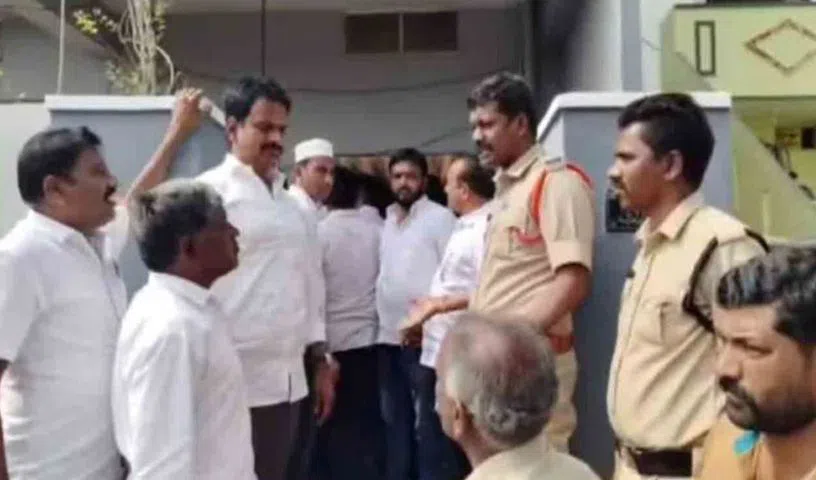
Tension in Nagarkurnool as Congress leaders try to force BRS candidate to withdraw

High political drama and localized clashes have triggered intense friction in the Nagarkurnool region following allegations that local Congress leaders attempted to aggressively pressure a Bharat Rashtra Samithi (BRS) candidate into withdrawing from an election contest. The high-handed approach by the ruling party cadres quickly escalated, drawing sharp resistance from opposition loyalists and necessitating swift police intervention to maintain law and order. According to ground reports, the confrontation erupted during the official window for nomination scrutiny and withdrawals. A group of Congress workers reportedly cornered the BRS candidate, issuing verbal threats and attempting to force a signature on the official withdrawal forms. Upon hearing of the coercion, local BRS leaders and a wave of party cadres rushed to the scene to shield their candidate, leading to heated, face-to-face arguments and physical shoving between the rival political groups outside the administrative premises. The BRS leadership has vehemently condemned the incident, branding it a blatant assault on democratic processes and a clear violation of fair election protocols. Opposition spokespersons alleged that the ruling Congress party is resorting to intimidation tactics out of sheer fear of losing the regional contest, misusing local administrative machinery to clear the field. They demanded that the State Election Commission immediately review the CCTV footage of the incident, provide round-the-clock police protection for their candidate, and register criminal cases against the involved Congress workers.

Political News

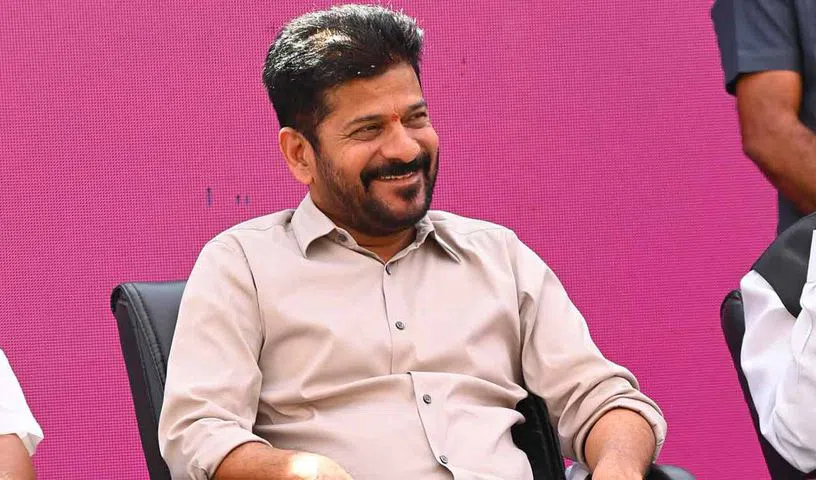
Revanth Reddy’s secret meetings with MLAs spark rift in Telangana Congress

nternal rifts within the ruling Telangana Congress surfaced following a series of confidential, closed-door meetings held by Chief Minister A. Revanth Reddy with select MLAs from districts like Mahabubnagar and Nagarkurnool. The highly secretive nature of these interactions, which bypassed established party channels, sparked severe discontent among senior cabinet ministers and veterans within the Telangana Pradesh Congress Committee (TPCC). The friction stems primarily from the complete exclusion of district-in-charge ministers and senior leaders from these discussions. Under the state’s Praja Palana governance framework, district-in-charge ministers are explicitly tasked with overseeing regional development, welfare implementation, and local political coordination. By issuing immediate, short-notice invitations directly to individual MLAs and keeping party veterans entirely in the dark, the Chief Minister’s approach has been criticized as a parallel mechanism that undermines the authority of his own cabinet colleagues and threatens the organizational hierarchy at Gandhi Bhavan. Compounding this internal discomfort is the timing of these meetings, which coincided with separate, official constituency-wise reviews conducted by AICC Telangana in-charge Meenakshi Natarajan. Senior Congress leaders raised concerns over the conflicting signals being sent to the party high command, arguing that the lack of transparency breeds unnecessary suspicion and groupism within the party cadre. Critics from within the ruling party have voiced worries that sidelining senior figures and creating exclusive access channels could severely disrupt party unity ahead of key local body elections.

Political News

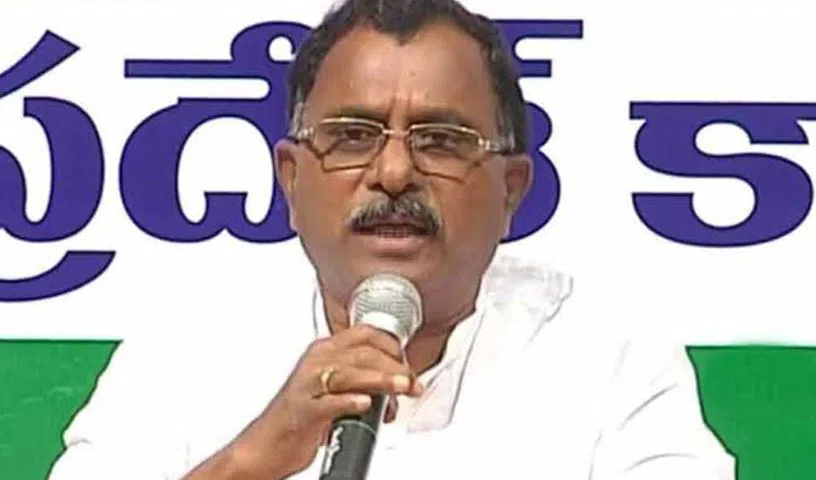
Congress MP Mallu Ravi defends Bandi Sanjay in POCSO case involving son

A major cross-party political controversy erupted in Telangana as Congress MP from Nagarkurnool, Dr. Mallu Ravi, openly defended Union Minister of State for Home, Bandi Sanjay Kumar. The defense came amid a raging political storm and intense demands from opposition parties for Bandi Sanjay’s resignation following the registration of a Protection of Children from Sexual Offences (POCSO) Act case against his son, Bandi Sai Bhageerath. Addressing the media at Gandhi Bhavan, Mallu Ravi strongly questioned the rationale behind targeting the Union Minister for the alleged actions of his adult son. Stressing that “children can commit mistakes,” the Congress MP argued that a father should not be held legally or politically responsible for an individual mistake made by his son. He asserted that political criticism would only be justified if Bandi Sanjay had actively tried to abuse his official power to shield his son or prevent him from surrendering to law enforcement authorities. Mallu Ravi highlighted that despite Bandi Sanjay holding a powerful position as a Union Minister, the Telangana police had successfully registered the case and the accused had ultimately surrendered to be sent to judicial custody, showing that the law was taking its natural course. To counter the aggressive resignation demands being pushed by the Bharat Rashtra Samithi (BRS), Ravi drew a sharp political parallel to the past arrest of BRS leader K. Kavitha. He questioned why BRS leaders KT Rama Rao and T. Harish Rao did not resign from their respective posts at that time, calling their current demands for Bandi Sanjay’s resignation hypocritical.